The Most Influential Sanitary Ware Manufacturer Hubs in China
Introduction
Step into Foshan, Kaiping, and Zhongshan — three cities in southern China that together form the beating heart of the world’s sanitary ware industry. From sleek ceramic basins to precision-engineered faucets and smart toilets, nearly every major bathroom trend has roots in these bustling industrial zones.
For decades, this region has combined craftsmanship, scale, and innovation to serve markets across Europe, North America, the Middle East, and beyond. But what truly makes Guangdong’s sanitary ware cluster the global leader? Let’s explore how these cities built an ecosystem that blends tradition with cutting-edge manufacturing.
The Manufacturign Cluster Effect: Why Proximity Drives Performance
The term “cluster effect” perfectly describes how Foshan, Kaiping, and Zhongshan operate. Within a few hours’ drive, you’ll find tens of thousands of manufacturers, raw material suppliers, mold makers, plating specialists, and logistics companies — all working in synergy.
This tight industrial clustering creates multiple advantages:
• Efficiency and Specialization: A faucet factory in Kaiping can source brass components from a nearby casting shop, molds from Zhongshan, and ceramic handles from Foshan — all within a single day.
• Rapid Innovation: When materials, technicians, and designers are concentrated in one region, it’s easy to experiment and prototype faster.
• Vertical Integration: Many manufacturers handle everything in-house, from CAD design to assembly and polishing, cutting both costs and lead times.
• Shared Expertise: As businesses compete side by side, knowledge spreads quickly. The result? A continuous cycle of improvement and innovation.
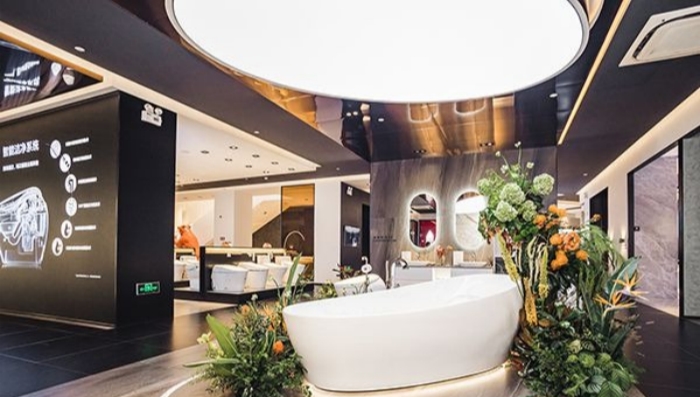
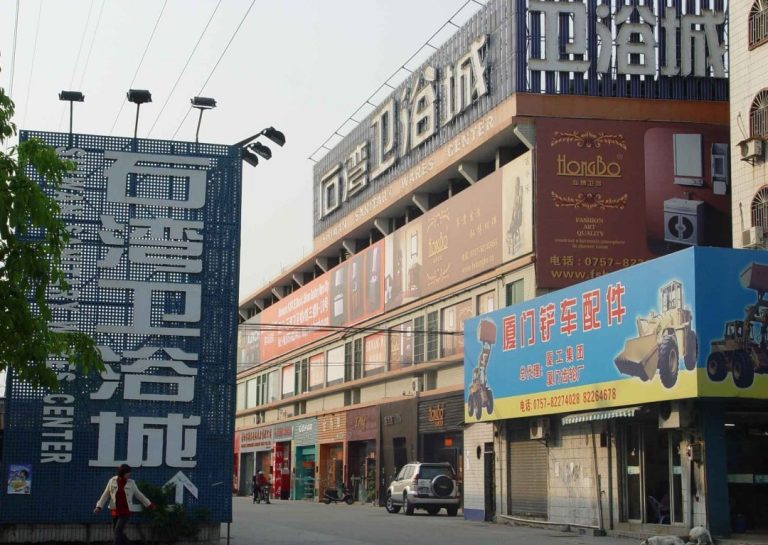
In Foshan’s ceramic towns, streets are lined with tile and sanitary ware showrooms displaying the latest collections — proof of how concentrated creativity and competition fuel global trends.
Quality and Craftsmanship: Tradition Meets Technology
Unlike the stereotype of “low-cost Chinese manufacturing,” the Foshan-Kaiping-Zhongshan triangle thrives on quality, not just affordability. Generations of artisans have passed down their skills in metalworking, ceramics, and finishing, blending old-world craftsmanship with modern precision technology.
• Foshan is famed for its ceramic tradition — producing high-grade toilets, basins, and tiles that rival Italian and Spanish quality.
• Kaiping, known as the “faucet capital of China,” leads in brass casting, surface finishing, and precision component manufacturing.
• Zhongshan complements the region with plastic injection, electronics for smart toilets, and lighting for bathroom integrations.
The result? A region where every part of your bathroom set — from the faucet to the bathtub — can be designed, produced, and packed within a 100 km radius.
These manufacturers aren’t merely copying Western designs; many have in-house R&D teams and collaborate with global brands to co-develop products for luxury and mid-range markets alike.
Supply Chain Superiority: From Clay to Container Ship
When sourcing from China’s sanitary ware capital, you benefit from a mature and vertically integrated supply chain. The local ecosystem covers every production stage:
- Raw Material Procurement: Ceramic-grade clays and metal alloys are sourced locally and processed with advanced filtration and refining equipment.
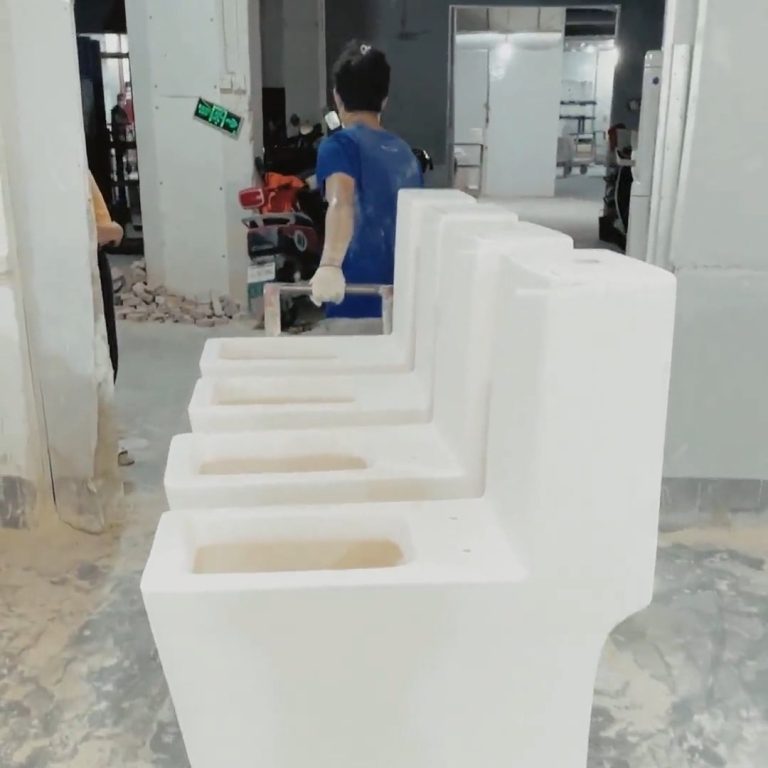
- Component Manufacturing: Specialized workshops handle tasks like mold making, brass forging, electroplating, and polishing — each within close reach of the main factories.
- Assembly and Quality Testing: Large manufacturers operate semi-automated assembly lines equipped with pressure and corrosion testing machines to ensure product reliability.
- Packaging and Logistics: The Guangdong port network (near Guangzhou and Shenzhen) enables fast shipping to global destinations.
This interconnected infrastructure gives buyers two powerful advantages: shorter lead times and lower costs without compromising quality.
Even better, supply chain transparency has improved dramatically over the past decade. Many factories now provide real-time production tracking and digital sample approvals, giving overseas clients greater control and confidence.
Visiting Trade Shows in Foshan: What to Look For
If you’re serious about sourcing sanitary ware or exploring partnerships, attending trade shows in Foshan is one of the best ways to connect directly with manufacturers. The most prominent event is the Foshan International Ceramic and Sanitary Ware Fair, held annually in spring and autumn.
Here’s how to make the most of your visit:
- Do Your Homework: Research exhibitors in advance and shortlist the factories that align with your product category — faucets, basins, hardware accessories, or bathroom furniture.
- Ask for Factory Locations: Many show exhibitors are based within a few hours’ drive. Don’t hesitate to schedule follow-up visits after the show.
- Inspect Craftsmanship: Pay attention to plating quality, finish consistency, and hardware precision. Touch and inspect samples in person — photos can be deceiving.
- Talk About OEM/ODM Capabilities: Some suppliers specialize in small-batch customization for designers, while others cater to bulk orders for brands and wholesalers.
- Check Certifications: Ask about CE, CUPC, and WaterMark certifications if you’re targeting Western markets.
Many trade shows in Foshan are also attended by suppliers from neighboring Kaiping and Zhongshan, making it a one-stop sourcing destination for the entire bathroom industry.
Who Should Source from the Foshan Area?
The Foshan sanitary ware ecosystem caters to a wide range of business needs:
- Brands, Distributors, and Wholesalers
If you’re building or expanding a product line, the cluster’s OEM and ODM factories are your best bet. They can tailor designs, branding, and packaging for your market. Consistency, quality control, and scalability make them ideal for long-term cooperation.
- Interior Designers and Boutique Projects
Designers seeking custom or small-lot production will find flexible workshops willing to accommodate special finishes, unique shapes, or smaller MOQs. Visit wholesale markets like the China Ceramics City in Foshan for inspiration and manageable order quantities.
- End Consumers and Retail Buyers
If you’re furnishing homes or hotels, wholesale markets offer an incredible range of ready-made selections at competitive prices. Many vendors ship globally and can handle export logistics directly.
Final Thoughts
The trio of Foshan, Kaiping, and Zhongshan represents much more than China’s industrial power — it’s a living network of heritage, innovation, and craftsmanship. Here, centuries-old ceramic artistry meets modern automation and global design trends.
Whether you’re a brand, distributor, designer, or end buyer, understanding this region’s cluster dynamics and supply chain strengths will help you source smarter and build stronger partnerships.
If you’re planning to explore the sanitary ware capital of the world, our local sourcing team can help you connect with trusted factories, guide your trade fair visits, and manage your project from inquiry to shipment.
Partner with a Local Sourcing Agent - Beatus Sourcing
Navigating this massive industrial ecosystem can feel overwhelming, especially for first-time buyers. That’s where a professional sourcing agent in Zhongshan or Foshan can help.
A local agent provides:
- Factory identification, verification, and background checks
- Price negotiation and cost optimization
- Sample coordination and quality inspections
- Production follow-up and shipping arrangement
Working with a local sourcing expert ensures that you’re matched with reliable manufacturers and protected from the common pitfalls of long-distance sourcing — like miscommunication, quality inconsistency, or unnecessary intermediaries.
Contact Person: Colin
Whatsapp: +8613560427230
Email: beatus.sourcing@gmail.com
Wechat: ColinYeung100