
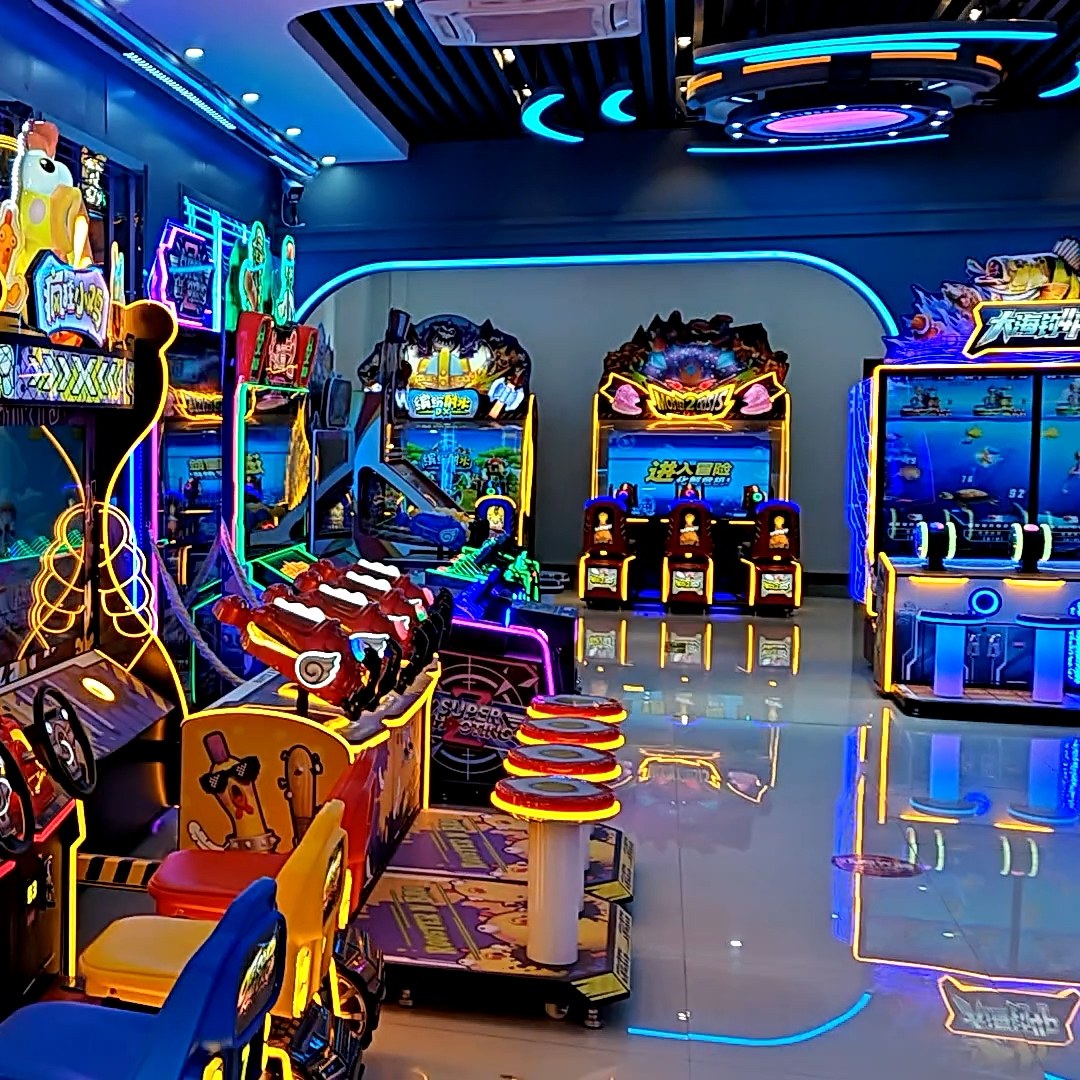
How to Select the Right Arcade Games Machines Supplier
A Step-by-Step Tutorial for Wholesalers & Arcade Owners
You’re not just buying machines. You’re betting on uptime, player satisfaction, and your venue’s reputation. Here’s exactly how to evaluate suppliers—without getting burned.
Introduction
Let’s be honest.
You can find an arcade machine supplier in about thirty seconds on Alibaba. Hundreds of them. Bartop cabinets, driving simulators, claw machines, redemption games—all just a few clicks away.
So why do so many first-time buyers get it wrong?
Because finding a supplier is easy. Finding a partner who delivers on time, stands behind their warranty, and actually understands your market? That’s the hard part.
We’ve seen it play out a hundred times. A Saudi operator goes with the lowest quote. The machines sit at customs for three weeks because the supplier didn’t provide CE docs. When they finally arrive, two units are DOA. The manufacturer stops replying to emails.
That’s not a machine problem. That’s a supplier selection problem.
This tutorial walks you through eight practical steps to get it right. Whether you’re sourcing directly or working with a sourcing agent based in Guangzhou or Shenzhen, these are the same filters experienced buyers use to separate serious manufacturers from middlemen with a showroom.
By the end of this page, you’ll know exactly:
- Where to find real manufacturers—not just trading companies
- Which certifications actually matter for your target market
- How to test machines when you can’t afford to ship a sample overseas
- What hidden costs kill your margins after the PO is signed
- Why export experience is the single most underrated vetting criterion
And if you don’t have time to fly to China, we’ll show you exactly how a local sourcing agent like Beatus becomes your eyes, ears, and leverage.
Why the Right Supplier Makes or Breaks Your Arcade Business
⚙️ Machine Reliability = Player Trust
An arcade machine isn’t a toaster. It runs twelve, sometimes sixteen hours a day, seven days a week. Buttons get mashed. Coin mechanisms jam. Screens stay on until they burn in. If a machine goes down on a Friday night and your supplier is offline until Monday, you don’t just lose that machine’s revenue. You lose the group of kids who walked out. You lose the birthday party that booked next weekend. You lose the reputation you’re still trying to build.
💰 Total Cost of Ownership Beats Unit Price Every Time
A $1,200 fighting cabinet from an unknown trader might look like a steal next to a $1,800 unit from an established manufacturer. But what happens when the power supply fries in month four? Who pays for return shipping? How long do you wait for a replacement board? Is there anyone who can even diagnose the problem? Cheap machines have a nasty habit of becoming expensive paperweights. Professional buyers don’t ask “What’s your price?” They ask “What’s my total cost over three years?”
🎨 Customization Isn’t a Luxury—It’s the Point
Your arcade isn’t a showroom for someone else’s catalog. It’s your brand, your layout, your audience. The right supplier doesn’t just slap your logo on a generic cabinet. They help you choose the right game mix for your demographic. They adjust the payout settings so redemption games hit the sweet spot between player excitement and profitability. They make sure the UI speaks Spanish, Arabic, or Bahasa Indonesia because your customers don’t read Mandarin. A supplier who can’t customize is a commodity. A supplier who can is a competitive advantage.
📈 Scalability – Can They Grow With You?
Your first order might be five machines. Your fifth order could be fifty. The supplier who treats you like a VIP when you’re small is rare; the one who maintains that service when you’re ordering containers is even rarer. Ask yourself: will this supplier still be in business two years from now? Will they remember your preferences? Will they prioritize your lead times when they’re busy? Great suppliers invest in long‑term relationships, not just POs.
Step 1: Define Your Business Requirements
Before you message a single supplier, answer these questions.
What type of venue are you running?
- Family Entertainment Center (FEC): Mix of redemption, video, and kiddie rides.
- Bar arcade / barcade: Retro cabinets, fighting games, social play.
- Redemption center: Prize-focused, high‑throughput ticket machines.
- Mall installation: High visibility, need for premium aesthetics.
- Pop-up / seasonal: Portable, low‑maintenance units.
- Craw Crane machines Shop
- Gashapon machines/Capsule vending machines center
Your machine mix flows directly from your concept. Don’t buy driving simulators for a toddler zone. Don’t buy kiddie rides for a craft beer crowd.
What’s your budget—and is it realistic?
Entry-level Chinese bartop units start around $130–$350. Commercial-grade 32-inch fighting cabinets run $600–$1,600. Premium VR or multi-player setups can exceed $10,000. Factor in:
- Shipping (sea freight adds $500–$2,000 per container)
- Import duties (varies wildly by country)
- Spare parts stock (budget 5–10% of order value)
- Local certification costs (CE, UL, FCC testing if not pre-certified)
Pilot vs. Scale
If this is your first order, do not order a container. Seriously. Start with one to five units. Test them in a live environment for 4–6 weeks. Measure play counts, downtime incidents, and customer feedback. Then scale.
Special requirements – get specific now
- Custom artwork? Branded marquees? Side panel decals?
- Multi-language UI? Your market speaks what?
- Payment systems: coins, bills, contactless, QR, card readers?
- Voltage: 110V (North America/Japan) or 220V (everywhere else)?
The more detailed your RFQ, the fewer surprises you’ll have when the invoice arrives.
Step 2: Research the Supplier Landscape
Where serious buyers find serious suppliers
B2B Platforms (Alibaba, Global Sources, Made-in-China)
These are useful for discovery, not verification. Use filters aggressively:
- “Verified Supplier” + on-site check mark
- 3+ years on platform
- Transaction history visible
- Response rate >90%, response time <4 hours
Look at the types of photos in their listings. Showroom photos with perfect lighting and no workers? Probably a trading company. Workshop photos with half-assembled cabinets, bins of components, and employees in uniform? Probably a real factory.
Trade Shows (IAAPA, DEAL, EAG, AAA)
IAAPA is the Super Bowl. If a supplier exhibits at IAAPA Orlando or Expo 2020, they’re serious about the international market. They’ve spent five figures on booth space, shipping machines to the US, and sending English-speaking staff. Even if you can’t attend, note which suppliers exhibit. It’s a strong credibility signal.
Visit the Manufacturing Clusters
Here’s a secret the biggest buyers know: you don’t find great suppliers by browsing websites. You find them by walking the streets of Panyu, Guangzhou. Panyu is to arcade machines what Shenzhen is to consumer electronics. Hundreds of factories, component suppliers, and export agents within a few square kilometers. You can visit eight factories in two days, compare workshop conditions side-by-side, and shake hands with the people who’ll build your machines. If you can’t travel—and most first-time buyers can’t—this is where a local sourcing agent becomes invaluable.
Outsource to a Sourcing Agent – The Smart Shortcut
A good sourcing agent isn’t a middleman. They’re your local intelligence. Here’s what they do for you:
- Pre-screen suppliers and identify which are actual manufacturers vs. trading companies with rented showrooms.
- Conduct unannounced factory visits to verify production capacity, headcount, and inventory truth.
- Negotiate pricing and payment terms without you revealing your hand.
- Perform in-line and pre-shipment inspections against your checklist.
- Handle export documentation, shipping coordination, and multilingual communication.
A sourcing agent based in Guangzhou costs a fraction of what you’d spend on a single factory visit. And they see things you wouldn’t know to look for.
Step 3: Assess Product Quality & Range
Quality isn’t subjective. Here’s what to verify.
Cabinet Construction
- Commercial-grade machines should use metal frames or 18mm+ plywood. Particle board swells, cracks, and fails in humid environments.
- Acrylic panels should be scratch-resistant, not raw acrylic that fogs after two weeks of kid fingerprints.
- Wiring should be neatly loomed, labeled, and secured. Rat’s nests inside the cabinet = future service nightmare.
Components
- Joysticks and buttons: Sanwa, IL, or genuine Happ? Or cheap clones that’ll mush out in three months?
- Monitors: Industrial-grade LCDs with 500+ nits brightness. Commercial monitors aren’t designed for 16-hour daily burn.
- Power supplies: Mean Well or equivalent. Non-branded PSUs are the #1 cause of field failures.
Certifications – Match Them to Your Market
| Certification | Market | What It Covers |
|---|---|---|
| CE | European Union | Safety, electromagnetic compatibility |
| UL / ETL | North America | Electrical safety |
| FCC | USA | Electromagnetic interference |
| RoHS | EU / Global | Restriction of hazardous substances |
| UKCA | United Kingdom | Post-Brexit UK compliance |
If a supplier can’t produce valid, unexpired certificates for your target market, move on. Customs delays are expensive. Getting units seized is catastrophic.
Product Portfolio Depth
Does the supplier offer current titles, or are they still pushing the same 12-in-1 multicades they sold in 2018? Ask:
- “What new games have you released in the past 12 months?”
- “Can you source licensed titles from Raw Thrills, Bandai Namco, or UNIS?”
- “Do you have an in-house software team, or do you outsource game development?”
Suppliers who can’t demonstrate recent product development are living off old tooling. They’re not investing in R&D. Eventually, their catalog will become obsolete—and so will your arcade.
Customization Depth
Not all customization is created equal.
- Level 1 (Cosmetic): Logo imprinting, color changes, custom marquees. Most suppliers can do this.
- Level 2 (Configuration): Button layout, coin mechanism type, language localization. Fewer suppliers.
- Level 3 (Engineering): Custom cabinet dimensions, firmware modifications, unique game logic, integration with external systems. This requires in-house R&D.
If you need Level 3 customization, verify that the supplier has engineers, not just salespeople.
Step 4: Verify Credibility & Track Record
Assume nothing. Verify everything.
Company History & Structure
- When was the company founded?
- Is this the original manufacturer, or a trading company operating under a different name?
- Do they own their factory building, or rent? (Ownership suggests stability; short-term leases suggest otherwise.)
Export Experience – The Most Underrated Criterion
Here’s what inexperienced suppliers don’t understand:
- North America needs 110V and NEMA plugs, not 220V with Schuko.
- Europe requires CE-marked power supplies and English manuals.
- The Middle East needs Arabic UI and sometimes specific religious considerations in game content.
- Australia requires RCM compliance and has strict biosecurity rules for wooden packaging.
A supplier who hasn’t shipped to your region before isn’t necessarily disqualified. But they need to demonstrate that they understand your requirements—and that’s worth verifying separately.
Multi-Language Readiness
Open their website. Is it available in English? Spanish? Arabic? Request a sample manual. Is it clearly translated, or obviously Google-translated nonsense? If the supplier can’t produce professional English documentation, your customers won’t understand how to operate or troubleshoot the machines. That becomes your problem.
Certifications
- ISO 9001, BSCI, SGS audit reports, industry awards.
- Verify certificates are still valid, not expired or photoshopped.
- Cross‑reference the issuing body and certificate number when possible.
Financial Stability
Avoid suppliers on the verge of bankruptcy. Signs of trouble: no recent trade show participation, no new product releases in 18+ months, frequent changes in company name or legal entity, aggressive discounting far below market average.
Supplier Verification via Sourcing Agent – The Local Intelligence Advantage
Beatus Sourcing agent can perform an unannounced factory audit—something you can’t do from 6,000 miles away. They’ll verify actual employee headcount, real production capacity, current workload, and inventory truth.
But physical verification is only half the picture.
Professional sourcing agent – Beatus, also conducts desktop due diligence using Chinese business information platforms like Tianyancha and Qichacha. These platforms are the local equivalent of Dun & Bradstreet—they pull directly from China’s State Administration for Market Regulation. They give you access to:
- Official company registration records – Legal name, registration number, date of establishment, registered capital
- Shareholder structure – Who really owns the company? Any recent equity changes?
- Legal proceedings – Lawsuits (as plaintiff or defendant), arbitration cases, court rulings
- Administrative penalties – Fines, license suspensions, safety violations
- Operating status – Is the business officially “in operation,” “cancelled,” or “revoked”?
- Annual report data – Declared revenue, employee count, paid-in capital
- Credit ratings and risk flags – Some platforms even assign a financial health score
Most overseas buyers don’t know these databases exist—and even if they do, navigating them in Chinese and interpreting legal documents requires local expertise.
We can pull a full corporate profile in 15 minutes and highlight red flags you’d never spot on your own:
- Pending lawsuits from suppliers or customers
- Registered capital reductions (a common sign of distress)
- Frequent changes in legal representative or business scope
- Administrative sanctions for export fraud or IP infringement
This combination of on-the-ground auditing and digital background investigation gives you the clearest possible picture of who you’re really dealing with.
For overseas buyers, this is the single most effective risk mitigation step you can take.
Step 5: Test Samples & Conduct Factory Audits
Why testing isn’t optional
An arcade machine runs on player enthusiasm. If the controls feel mushy, the screen is dim, or the software crashes on Level 3, players walk away. They don’t come back. Testing isn’t a formality. It’s the only way to know whether your supplier’s quality claims match reality.
The Sample Dilemma – What Actually Works
Shipping a full-size arcade cabinet from Guangzhou to Chicago costs $400–$800 in freight alone, plus duties, plus 4–6 weeks of transit. For a $1,200 machine, that’s a 50% premium just to touch it. So what do professional buyers do?
- Uncut, Unedited Operation Video: Supplier walks up to a random unit, powers on, inserts coins, plays through three full levels. No jump cuts. No editing. You’ll see boot time, screen quality, button responsiveness, sound clarity, coin mechanism function. If the supplier hesitates or offers a “showroom video” instead, that’s a red flag.
- Live Video Call Test: Schedule WhatsApp or WeChat video. Ask the supplier to tilt the cabinet, open coin box, press each button fifty times, run the machine continuously for 30 minutes. This takes 45 minutes and costs nothing. Astonishing how many buyers skip it.
- On-Site Testing by a Sourcing Agent: Sweet spot. Your agent visits with a test script, spends 1–2 hours per machine. They assess button feel, screen viewing angles, cabinet stability, ventilation adequacy. Record first-person video with real commentary.
The Golden Rule – Visit the Factory Yourself (Or Send Someone You Trust)
Nothing—nothing—replaces standing in front of the machine, pressing the buttons, and playing a few rounds. You’ll feel whether the cabinet feels solid or flimsy, whether the screen colors pop or look washed out, whether the joystick movement is crisp or sloppy, whether the sound system has punch or sounds like a clock radio. If you can’t travel, mandate your sourcing agent to be your human sensor. Don’t accept a checklist. Demand immersive video and real-time commentary.
Virtual Factory Audits – The Minimum Viable Alternative
Schedule a video walkthrough of the production line, component warehouse, testing station, finished goods area. A supplier who refuses a video tour is hiding something.
Step 6: Compare Quotations & Contract Terms
Price is what you pay. Value is what you get.
Beyond the Unit Price
Three suppliers quote you $1,450, $1,550, and $1,680 for a similar redemption game. The $1,680 supplier is probably not ripping you off. They’re probably including things the others aren’t. Compare:
- Included spare parts kit – Does the $1,450 quote include any spare buttons, fuses, or power supplies? Or will you be scrambling to find a proprietary part when something fails?
- Packaging quality – Foam corner protectors + wooden crate vs. double-walled carton vs. single-wall box. Transit damage claims are a nightmare. Pay for proper packaging.
- Warranty scope – 12 months parts-only vs. 12 months parts + labor vs. 24 months on major components. And who pays return shipping on warranty claims? (If the answer is “you do,” that’s a significant hidden cost.)
Understanding Incoterms
- EXW (Ex Works): You arrange everything. You’re responsible from the factory door. Maximum risk, maximum control.
- FOB (Free on Board): Supplier delivers to the port, loads onto the vessel. You take ownership once it’s over the ship’s rail. Industry standard for arcade machines.
- CIF (Cost, Insurance, Freight): Supplier pays for shipping and insurance to your destination port. Easier for you, but supplier controls the freight booking—and sometimes marks up both.
If you’re new to importing, FOB is usually the right choice. You control the freight forwarder, and you avoid paying supplier markup on shipping.
MOQ Flexibility
Large manufacturers prefer container orders. But many will accommodate pilot orders of 1–5 units—especially if you signal that this is a test before scaling. If a supplier refuses any order under 20 pieces and won’t discuss exceptions, they’re not equipped to support new market entrants. Move on.
Payment Terms – Protect Your Deposit
Standard terms in this industry: 30% deposit, 70% balance before shipment; 30% deposit, 40% upon production completion, 30% after inspection; 50% deposit, 50% against BL copy (for established relationships). Never send 100% upfront. If a supplier demands full payment before production, walk away.
Lead Time Realities
- Standard samples: 7–14 days
- Custom samples: up to 21 days
- Production runs: 20–35 days for established models
- Large custom orders: 45–60+ days
Add 25–40 days for sea freight, 5–10 days for air. Always build a buffer. The supplier’s “30 days” is 30 working days, not calendar days. Chinese New Year shuts down factories for 2–3 weeks. Plan accordingly.
Step 7: Evaluate After-Sales Support & Spare Parts
This is where good suppliers separate themselves from everyone else.
Why After-Sales Is Everything
Arcade machines break. That’s not a sign of poor quality—it’s the nature of electro-mechanical equipment subjected to thousands of aggressive interactions per day. What separates professional suppliers from amateurs is how they respond when things break.
Support Structure to Look For
- Dedicated account manager, not a shared inbox. Someone who knows your order history and machine configurations.
- 24/7 technical support (or at least timezone-aligned coverage). Problems don’t only happen during Guangzhou business hours.
- Remote troubleshooting capability. Can they guide your technician through diagnostics via video call? Do they have remote access to the machine’s software?
- Multilingual support. If your team speaks Spanish, does the supplier have Spanish-speaking engineers?
Spare Parts Availability
This is the single most common failure point in supplier relationships. Ask specifically:
- “Which spare parts do you keep in stock at all times?”
- “What’s your typical lead time for shipping spare parts?”
- “Do you offer a recommended spare parts kit for first-time buyers?”
- “What’s your pricing for common replacement parts?” (Some suppliers charge 5x cost on spares, effectively profiting from your machine’s failures.)
Professional suppliers will provide a spare parts price list upfront. They understand that keeping your machines running benefits everyone.
Training & Documentation
- Is the user manual professionally translated—or clearly machine-translated nonsense?
- Does the supplier provide maintenance videos or step-by-step troubleshooting guides?
- For large orders, can they provide on-site training for your technical staff?
Documentation quality is a direct reflection of how seriously the supplier takes after-sales support. If they can’t be bothered to write a clear manual, they can’t be bothered to support you after payment clears.
Warranty – What’s Actually Covered
Typical commercial warranties: 1 year on electronics, 1–2 years on major components (monitors, motors), 90 days on wear items (buttons, joysticks, coin mechanisms). But the real question is: what’s the process? Do you ship defective units back to China at your expense? (Prohibitively expensive.) Does the supplier ship replacement parts immediately and trust you to return the defective parts later? (Good suppliers do this.) Is there a local service center or partner who can perform warranty repairs? (Rare, but invaluable when available.)
The Sourcing Agent’s Role in After-Sales
A local agent doesn’t disappear after the order ships. They’re your escalation point when the supplier’s support goes silent. They can visit the factory in person to expedite spare parts, apply commercial pressure, and—if necessary—help you find alternative solutions. For buyers without a physical presence in China, this relationship is your insurance policy.
Step 8: Make the Decision & Start the Partnership
From evaluation to execution.
Use a Weighted Scorecard
Don’t choose a supplier based on gut feel or who was nicest on the Zoom call. Use a decision matrix.
| Criteria | Weight | Supplier A | Supplier B | Supplier C |
|---|---|---|---|---|
| Product Quality & Certifications | 25% | |||
| Customization Capability | 20% | |||
| After-Sales Support | 20% | |||
| Export Experience | 15% | |||
| Price & TCO | 10% | |||
| Communication & Responsiveness | 10% | |||
| TOTAL | 100% |
Score each supplier 1–5 per criterion, multiply by weight, sum the total. Set a minimum threshold—e.g., 4.0 average, and no score below 3 in any category. This prevents you from overlooking critical weaknesses because the price was attractive.
Start Small, Scale Fast
Your first order should be a pilot, not a program. Order 1–5 machines. Run them in your venue for 60 days. Measure play counts vs. expectations, technical issues, customer feedback, supplier responsiveness. If the pilot succeeds, you have data to justify scaling. If it fails, you’ve limited your downside.
Building the Long-Term Relationship
- Share your roadmap. Tell them you plan to open three more locations next year. Good suppliers will invest in your success because they know you’ll order again.
- Give feedback. When something isn’t right, tell them. Professional manufacturers want to improve; they can’t fix problems they don’t know exist.
- Pay promptly. Suppliers remember who pays on time. When you need expedited production or a custom modification, that goodwill translates into responsiveness.
Negotiation Tactics for Repeat Buyers
- Volume discounts – 5% off for 20+ units, 10% off for 50+, etc.
- Exclusive distribution rights – For your territory or channel
- Consignment programs – Stock held at supplier’s risk, you pay as machines sell
- Extended warranty – Free or discounted coverage beyond the standard term
These aren’t available on your first order. They become available after you’ve proven you’re not a one-off buyer.
Conclusion
The 8-Step Journey—Recap
- Define – Know what you need before you ask for it
- Research – Find real manufacturers, not just visible ones
- Assess – Quality isn’t subjective; verify components and certifications
- Verify – Check track record, export experience, and credibility (with sourcing agent due diligence)
- Test – Touch the product. Or hire someone who can.
- Compare – Total cost of ownership, not unit price
- Evaluate Support – Spare parts and after-sales separate pros from amateurs
- Decide – Scorecard-driven, start small, build long-term
Choosing a supplier isn’t a procurement exercise. It’s a business development decision. The right supplier keeps your machines running, your customers happy, and your venues profitable. They grow with you. They solve problems before they become crises. They treat your success as their success.
The wrong supplier—even one who’s just slightly wrong—bleeds you in a thousand small cuts. Shipping delays. Quality issues. Unresponsive support. Hidden costs. Each one manageable in isolation; cumulatively, they’ll drain your energy and your margins.
Whether you source independently or partner with a local sourcing agent, the principles are the same. Verify everything. Test before scaling. Prioritize partners over vendors.
With [BEATUS SOURCING IN GUANGZHOU], you get:
- ✅ Transparency – No hidden agendas, no bait-and-switch pricing
- ✅ Quality – Machines that run for years, not months
- ✅ Partnership – We grow as your arcade grows, with boots on the ground in the world’s largest arcade manufacturing hub
Appendix: Quick Reference – Key Metrics & Benchmarks
| Metric | Benchmark | Notes |
|---|---|---|
| On-time delivery rate | >95% | Sub-90% indicates systemic issues |
| Response time | <4 hours | <1 hour for premium suppliers |
| Reorder rate | >25% | >40% suggests strong retention |
| Defect rate (first 90 days) | <3% | Higher requires root cause analysis |
| Warranty period | 12–24 months | Confirm what’s covered |
| Spare parts lead time | <72 hours | For critical components |
| Sample production | 7–14 days | Standard models |
| Production lead time | 20–35 days | Established models |
| MOQ flexibility | 1–5 units | For pilot orders |
Ready to find the right supplier—without the guesswork?
📌 Send us a message — we’ll get back to you within hours.
WE ARE A REAL LOCAL SOURCING TEAM.
📍 Beatus Sourcing – Based in Panyu, Guangzhou. Right where the action is.
⚙️ Professional is Everything
More Than 15 Years of Sourcing Experience
📦 We Provide End-to-End Service
Product Sourcing · Factory Audit · Contract Security · Order Following-Up · Quality Inspection · Import & Export Compliance · Shipping Arrangement · After-Sales Support
🛺 Market & Factory Visiting Tour Guide
We Handle the Whole Business Trip.
From the moment you land in Guangzhou, we take care of the entire itinerary. Whether you’re looking to source arcade machines, components, or connect with verified manufacturers, we’ll design a customized visiting route based on exactly what you’re looking for.
✅ Here’s what’s included:
- Airport pickup & local transportation — Based on your request.
- Market tours — Xingli, Huachuang, and surrounding villages like Caisan, Jinshan, Longmei, and Xinshuikeng.
- Factory walkthroughs — real production floors, not just showrooms.
- One-on-one supplier introductions — we connect you directly with factory owners and decision-makers.
- On-site interpretation — no language barrier. No miscommunication.
- Post-visit support — follow-ups, quotations, and logistics coordination.
🤝 Whether you’re a first-time buyer or a seasoned importer, we help you navigate Panyu’s amusement ecosystem like a local.