
Introduction
China has long been the world’s powerhouse for lighting manufacturing. From decorative fixtures to cutting-edge LED technology, thousands of factories produce lighting products that illuminate homes, hotels, and cities across the globe. But if you’re exploring OEM (Original Equipment Manufacturer) or ODM (Original Design Manufacturer) services for your lighting brand, understanding how the full process works—from concept to mass production—is essential for success.
This guide walks you through each stage of the OEM/ODM journey, explains what to expect when working with Chinese suppliers, and offers practical sourcing tips to ensure your project runs smoothly.
What OEM and ODM Mean in the Lighting Industry
Before diving into the process, let’s clarify two key terms used in manufacturing:
- OEM (Original Equipment Manufacturer): The factory produces lighting products based on your custom designs, specifications, or branding. You control product features and packaging, while the manufacturer handles production.
- ODM (Original Design Manufacturer): The factory already has ready-made designs that you can modify slightly (logos, minor changes) and rebrand as your own. It’s faster and requires less upfront R&D.
For example, if you want to create an all-new smart LED wall light with your company logo — that’s OEM. But if you select a factory’s pre-existing downlight design and add your brand name — that’s ODM.
Why China Is the Global Leader in Lighting OEM & ODM
China dominates the lighting industry for several reasons:
- Complete Supply Chain: From LED chip producers to metal parts, plastic molding, and packaging — everything you need is available locally.
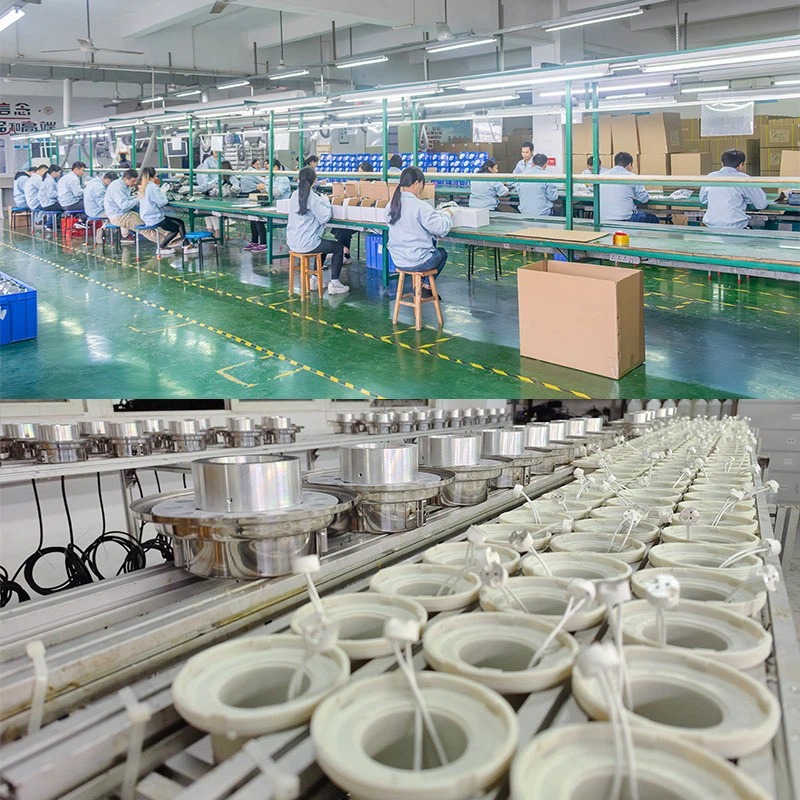
- Advanced Equipment: Many top factories use automated assembly lines, SMT machines, and photometric testers for precision and consistency.
- Flexible Order Quantities: Factories can accommodate both small trial batches and mass production runs.
- Competitive Pricing: Strong local competition and efficient logistics reduce overall costs.
- Experience with Global Standards: Many suppliers comply with CE, UL, SAA, and RoHS certifications to meet export regulations.
Cities like Zhongshan, Shenzhen, and Foshan are particularly well-known for lighting manufacturing clusters, each serving international clients through trade fairs, B2B platforms, and sourcing agents.
The Complete OEM/ODM Process: Step-by-Step
Let’s take a closer look at what the process actually involves:
- Product Concept & Design
The process begins with your product idea. This could be a rough sketch, reference photo, or detailed 3D CAD drawing. For OEM orders, you’ll need to specify your requirements precisely:
- Functionality (e.g., brightness level, color temperature, beam angle)
- Materials and finishes (metal, plastic, glass, etc.)
- Dimensions and mounting styles
- Compliance standards for your target market
If it’s ODM, the factory can share existing models that fit your brand’s positioning, letting you select or slightly modify designs.
- Selecting the Right Manufacturer
Choosing the right factory is the most critical decision. Look for manufacturers with:
- Proven OEM/ODM experience
- Strong R&D capabilities and testing facilities
- Clear quality control systems
- Positive export track records
You can find suppliers through trade fairs, online directories, or — more efficiently — via a local sourcing agent in Zhongshan who can audit the factory, confirm production capacity, and ensure credibility.
- Quotation and Feasibility Analysis
Once your specifications are confirmed, the factory provides a quotation including:
- Product unit cost based on materials and features
- Tooling or mold setup fees (for custom designs)
- Estimated lead time for samples and production
Evaluate costs carefully — the cheapest option often sacrifices material quality or warranty support. Ask the supplier to provide a Bill of Materials (BOM) breakdown if possible for transparency.
- Sample Development and Prototyping
The next stage is sample creation. The factory will produce a prototype according to your design or modifications. This sample should demonstrate actual appearance, color, performance, and packaging.
You’ll need to:
- Review brightness, color temperature, and structure
- Test safety and durability
- Verify logo printing and packaging
Usually, two or three sample rounds are needed before final approval.
- Contract and Order Confirmation
Once samples are approved, sign a formal Purchase Agreement that specifies:
- Product details and materials
- Quantity and pricing
- Lead time and delivery terms (usually FOB or EXW)
- Payment terms (commonly 30% deposit, 70% before shipment)
- Warranty and after-sales policies
Never skip this step. A clear written contract protects both sides from misunderstandings.
- Tooling, Production, and Quality Control
For custom OEM items, the manufacturer first builds molds or assembly jigs. Then mass production begins.
To maintain quality:
- Confirm that all materials match the approved sample
- Request in-line inspections or third-party quality checks
- Ask your sourcing agent to visit the site during production
Factories with proper quality assurance (QA) systems usually issue inspection reports covering brightness, consistency, safety, and packaging.
- Packaging and Branding
Once assembled, lights are labeled and packaged with your branding. You can customize:
- Product labels with your logo and model number
- User manuals and QR codes linking to your website
- Eco-friendly or premium packaging materials
Good packaging not only protects the product but also reinforces your brand identity in competitive markets.
- Final Inspection and Shipping
Before final payment, a pre-shipment inspection ensures everything matches approved specifications. A trusted sourcing partner or inspection company can verify quantity, finish, and test key functions on-site.
After signoff, the goods are packed for shipment. Factories usually assist with export documentation including packing lists, invoices, and certificates of origin.
Common Challenges and How to Overcome Them
Working overseas always involves challenges. Here’s how to navigate common issues:
- Language and Communication Barriers: Use professional interpreters or appoint a local representative to avoid misunderstandings.
- Quality Inconsistency: Define standards clearly, inspect regularly, and work only with verified suppliers.
- Intellectual Property Risks: Register your trademarks in China and use NDAs before sharing designs.
- Hidden Costs: Clarify tooling, shipping, and customization fees early in the negotiation.
A reliable sourcing agent in Zhongshan can help manage these risks, bridging the gap between you and manufacturers.
Why Partner with a Local Sourcing Agent
For international buyers unfamiliar with China’s manufacturing landscape, collaborating with a trusted local agent can make the process faster and safer. Here’s what a professional sourcing agent does:
- Understands your product requirements and budget
- Identifies qualified lighting OEM/ODM factories
- Negotiates cost-effective pricing
- Manages sample tracking and factory communication
- Conducts quality inspection and shipment coordination
As a Zhongshan-based sourcing agency, we’ve helped global clients bring their lighting concepts to life. Whether you need a decorative lamp or a full range of commercial fixtures, we ensure every step—from sample to shipment—meets your expectations.
Final Thoughts
Bringing a lighting product from concept to market through OEM or ODM manufacturing is an exciting opportunity. China’s lighting industry offers unmatched flexibility, scale, and technical expertise—but success depends on understanding the process and choosing the right partners.
Partner with a Local Sourcing Agent - Beatus Sourcing
If you want to turn your lighting idea into reality, our Zhongshan sourcing team can guide you from prototype to mass production, ensuring quality, transparency, and timely delivery at every stage.
Get in touch today to start developing your next lighting project with confidence.
Contact Person: Colin
Whatsapp: +8613560427230
Email: beatus.sourcing@gmail.com
Wechat: ColinYeung100